A Beginner's Guide to Flipping Items from Garage Sales and Estate Sales

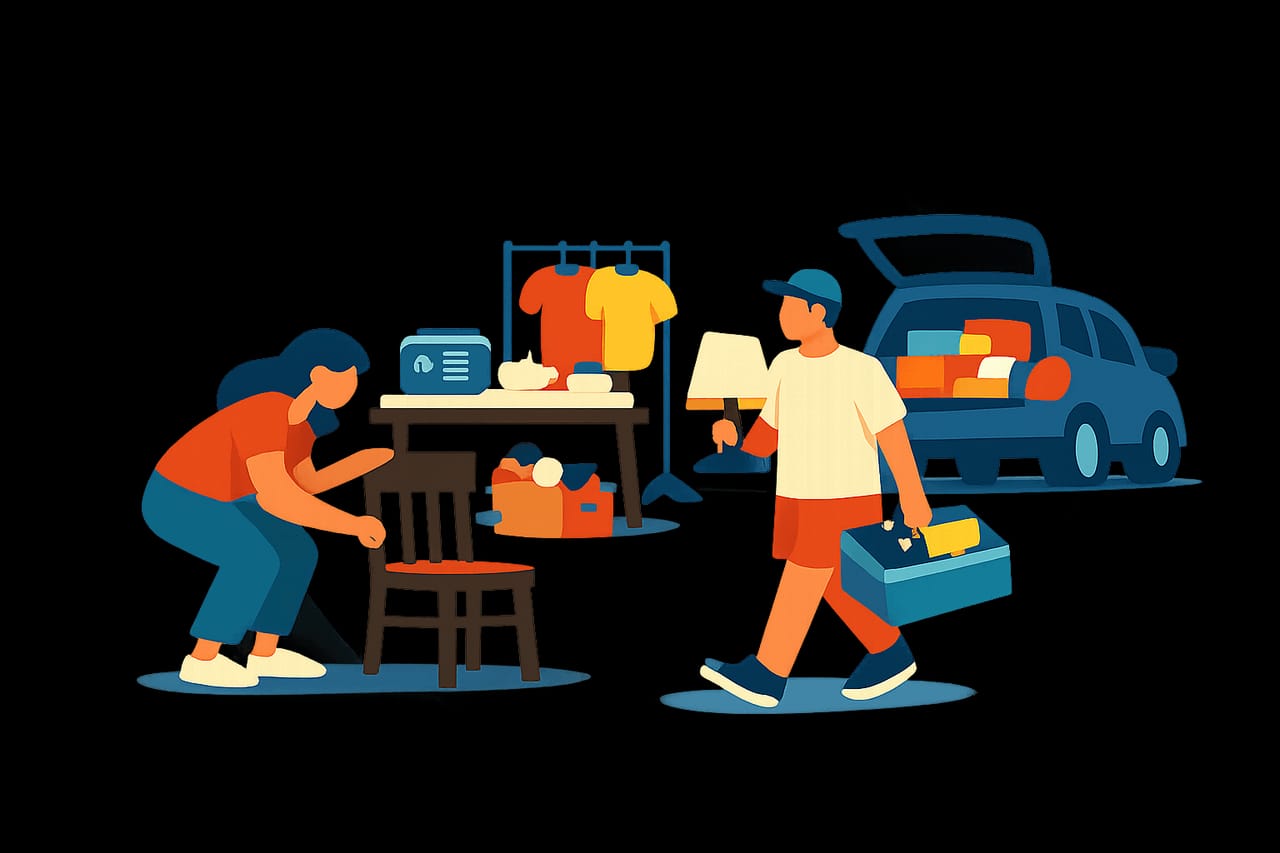
Flipping — buying items at low prices and reselling them for a profit — is one of the most accessible side hustles around. You don't need a storefront, you don't need inventory capital, and you can start this weekend.
The best part? Garage sales and estate sales are among the most profitable sourcing channels for resellers. Sellers are motivated to get rid of items, pricing is often below market value, and the competition is far less fierce than at thrift stores where other flippers are picking through the same racks.
Here's how to get started.
Why Local Sales Beat Thrift Stores for Sourcing
Thrift stores are the go-to sourcing spot for most new flippers, and they can be productive. But local sales have several advantages:
Lower prices. Thrift stores have gotten savvy about pricing — many now research eBay and price their best items accordingly. Garage sale sellers just want stuff gone and often price based on gut feeling, not market value.
Less competition. Every thrift store has regulars who hit the shelves daily. Garage sales are spread across neighborhoods, harder to monopolize, and rotate inventory every weekend.
Bulk opportunities. At a garage sale, you can negotiate a deal on 10 items at once. Try doing that at Goodwill. On OfferTrackr, the bundle offer feature makes this even easier — negotiate on everything you want and check out in one transaction. See Bundle Offers — How to Score Deals on Multiple Items at Once for details.
Better condition. Items at garage sales come directly from homes. They haven't been tossed in donation bins, sorted by retail workers, or handled by dozens of shoppers.
What Categories Flip Best
Not everything at a garage sale is worth flipping. Focus on categories with strong resale demand and healthy margins:
Furniture (highest margins, most effort)
Solid wood furniture bought at garage sale prices and sold locally can yield 3-5x your purchase price. A dining table bought for $40 can sell for $150-$200. A mid-century modern dresser for $50 might sell for $200-$400.
The catch: Furniture requires transportation, storage space, and sometimes light restoration. But the margins make it worthwhile. See 4 Easy Steps To Get the Best Offers For Your Used Furniture Locally for tips on what sells best.
Brand-name tools (consistent demand)
DeWalt, Milwaukee, Makita, and Bosch power tools hold their value extremely well. A used cordless drill set bought for $20 at a garage sale can sell for $60-$80 on eBay or Facebook Marketplace. Hand tools from premium brands (Snap-on, Knipex, Wera) have dedicated followings.
Vintage and collectibles (knowledge-dependent)
This is where deep knowledge pays off. Vintage Pyrex, mid-century pottery, vinyl records, vintage clothing, and brand-name collectibles can sell for 5-20x what you'd pay at a local sale. But you need to know what you're looking at.
Start with one category and learn it well. Follow collector communities on Reddit, Facebook, and YouTube. Study what sells and what doesn't. Over time, you'll develop an eye that spots value in seconds.
Electronics (fast turnaround)
Gaming consoles, quality Bluetooth speakers, and name-brand small appliances flip quickly. The key is testing everything before you buy and sticking to brands with resale demand. A PS4 bought for $50 might sell for $120. An Instant Pot for $5 sells for $30-$40.
Kids' items (seasonal)
Lego sets sell above retail when complete. Quality wooden toys, brand-name baby gear (after checking for recalls), and children's bikes all have strong resale markets. Parents are always looking for deals on kid stuff.
Clothing (niche)
General clothing at garage sales isn't worth flipping — the margins are too thin for the effort. But specific brands are exceptions: Patagonia, North Face, Lululemon, vintage band tees, and designer accessories. If you spot a Patagonia fleece for $3, it'll sell for $40-$60 on Poshmark or eBay.
Where to Resell
Different items sell better on different platforms:
| Item Type | Best Platform | Why |
|---|---|---|
| Furniture | Facebook Marketplace, Craigslist | Local pickup avoids shipping costs |
| Electronics | eBay, Facebook Marketplace | Large buyer pool, easy to ship |
| Clothing | Poshmark, eBay, Mercari | Built-in fashion buyer audience |
| Vintage / collectibles | eBay, Etsy | Collectors search these platforms |
| Tools | eBay, Facebook Marketplace | Strong demand on both |
| Books | Amazon, eBay | ISBN scanning makes listing fast |
| Lego | eBay, BrickLink | Dedicated Lego marketplace |
How to Research Before You Buy
The most important skill in flipping is knowing what something is worth before you buy it. Here's your in-the-field research toolkit:
eBay "Sold" listings. Search for the item on eBay, then filter by "Sold Items." This shows actual sale prices, not wishful asking prices. If a drill set consistently sells for $70-$80, and you can buy it for $15, that's a flip.
Amazon "Used" prices. For books and mainstream products, check what used copies sell for on Amazon.
Google Lens. Take a photo and search. This identifies brands, patterns, and models you might not recognize — especially useful for vintage items.
Mercari / Poshmark comps. For clothing and accessories, check what similar items have sold for on these platforms.
The 3x rule. As a beginner, aim for items where you can sell for at least 3x what you pay. This accounts for platform fees (10-15%), shipping costs, and the occasional dud. A $10 buy should sell for at least $30.
Getting Started This Weekend
Here's your beginner action plan:
Pick 2-3 categories from the list above. Don't try to flip everything — focus on areas where you can build knowledge quickly.
Find sales on OfferTrackr. Browse collections online before driving anywhere. You can see photos, prices, and make offers from your phone — which means you can source efficiently without spending all day driving between sales. See How to Find the Best Garage Sales and Estate Sales Near You for more sourcing spots.
Set a budget. Start with $50-$100 for your first sourcing trip. This limits your risk while you learn what works.
Buy 5-10 items. Focus on items that pass the 3x rule. Don't overthink it — the goal is to learn by doing.
List immediately. Don't let items sit. Take good photos, write clear descriptions, and list on the appropriate platform within 24 hours of buying.
Track everything. Keep a simple spreadsheet: what you bought, what you paid, what you sold it for, platform fees, and shipping costs. This tells you which categories are most profitable for you.
Common Beginner Mistakes
Buying too much too fast. Start small. It's better to flip 5 items successfully than to buy 50 items and have 40 of them sit in your garage.
Ignoring condition. A $5 item that needs $20 worth of repair isn't a deal. Be realistic about what you can and can't fix.
Pricing too high. New flippers often overprice items and wonder why they don't sell. Price to move — a fast sale at a reasonable margin beats a slow sale at a high margin.
Forgetting fees. eBay takes ~13%, Poshmark takes 20%, Mercari takes 10%. Factor these into your profit calculations before you buy.
Holding too long. If an item hasn't sold in 30 days, lower the price. Inventory that doesn't sell is just clutter with a price tag.
Flipping from local sales is one of the best ways to make extra money with minimal startup cost. The key is starting small, learning one or two categories well, and reinvesting your profits into better sourcing.
Browse local garage sales and estate sales on OfferTrackr to start sourcing. For more on finding sales, see How to Find the Best Garage Sales and Estate Sales Near You. For item-specific advice, see Top 10 Things to Find Great Deals on When Buying Locally and Craigslist vs eBay? Explore When Selling Locally Makes the Most Sense.