Estate Sale, Garage Sale, or Moving Sale — What's the Difference and Which Is Right for You?

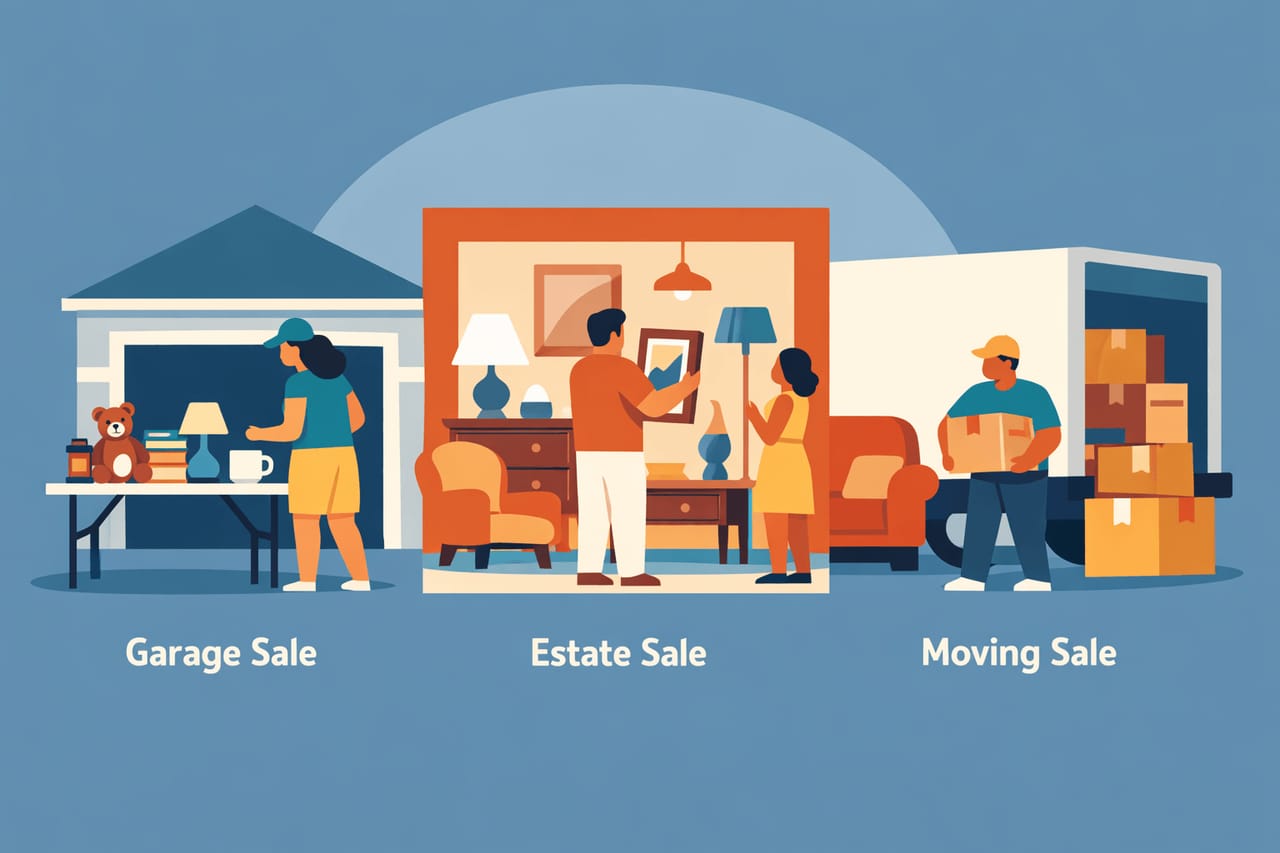
You have a bunch of stuff to sell. Maybe it's a houseful, maybe it's a few carloads. The question isn't whether to sell — it's how.
Estate sales, garage sales, and moving sales are different formats for different situations. They attract different buyers, work on different timelines, and require different levels of effort. Picking the right one sets you up for a smoother experience and better results.
Here's how they compare.
Garage Sale
What it is: A casual, short-term sale — typically one or two days — where you sell items from your home, usually from the driveway, garage, or front yard.
Best for: Decluttering, spring cleaning, getting rid of accumulated stuff you no longer need. You're keeping your home and your life; you're just trimming the excess.
Typical items: Clothing, kids' toys, kitchen gadgets, books, small furniture, decorations, tools, sporting goods. Mostly everyday household items.
How many items: Usually 20-100 items. Enough to fill a few tables and maybe a furniture section.
Timeline: 1-2 weeks of preparation, 1-2 days of selling.
Buyer expectations: Bargain prices. Garage sale shoppers expect to pay $1-$5 for most small items and significant discounts on larger items. Haggling is expected and welcomed.
Effort level: Low to moderate. You gather items, set up tables, make signs, and spend a Saturday in your driveway.
See Step-by-Step Guide to Hosting a Successful Garage Sale and Top 10 Tips To Pull Off the Perfect Garage Sale for complete guides.
Estate Sale
What it is: A comprehensive sale of most or all of a household's contents. Usually held inside the home, with items organized by room. Often spans 2-3 days with decreasing prices each day.
Best for: Liquidating the contents of a home — typically after a death, a move to assisted living, or a major downsizing. The key distinction: you're selling the majority of what's in the home, not just the extras.
Typical items: Everything — furniture, appliances, kitchenware, art, antiques, collectibles, jewelry, tools, linens, clothing, books, and often items with real value (quality furniture, vintage pieces, estate jewelry).
How many items: Hundreds. Sometimes thousands. An entire household worth of possessions.
Timeline: 2-4 weeks of preparation (inventory, pricing, staging), 2-3 days of selling, plus post-sale cleanup and donations.
Buyer expectations: Higher quality items at below-retail prices. Estate sale buyers are often collectors, dealers, and serious shoppers willing to pay fair prices for good items. Day 1 is close to full price; Day 3 is deep discount.
Effort level: High. Estate sales require significant inventory work, pricing research (especially for antiques and collectibles), staging, and typically at least 2-3 people running the sale. Many people hire professional estate sale companies for this reason.
See Hosting a Successful Estate Sale for Beginners, 8 Easy Tips to Host A Successful Estate Sale, and Estate Sale 101 — The Complete Guide for Families for detailed guides.
Moving Sale
What it is: A time-pressured sale where you sell items you can't or don't want to take with you to a new home. It's like a garage sale, but with more urgency and often larger items.
Best for: People relocating — whether across town, across the country, or downsizing to a smaller space. You have a hard deadline (your move date) and need items gone by then.
Typical items: Furniture is the star of moving sales. Also large appliances, patio furniture, storage items, and anything too expensive or impractical to move. You'll also have the usual garage sale mix of smaller items.
How many items: 30-150 items, heavily weighted toward larger items that are expensive to move.
Timeline: 2-6 weeks before the move date. The earlier you start, the more options you have for pricing and promotion.
Buyer expectations: Good deals, especially on furniture. Buyers know you're motivated by a deadline, which gives them some negotiating leverage. That said, quality furniture at moving sale prices is a great deal for both sides.
Effort level: Moderate, but with time pressure. The move itself is already stressful, so adding a sale on top requires planning. Starting early is the key to keeping it manageable.
See Moving? How to Sell Everything Before You Go for a complete moving sale guide.
Quick Comparison
| Garage Sale | Estate Sale | Moving Sale | |
|---|---|---|---|
| Scale | 20-100 items | 100-1,000+ items | 30-150 items |
| Location | Driveway / garage | Inside the home | Either |
| Duration | 1-2 days | 2-3 days | Ongoing until move day |
| Pricing | Bargain ($1-$25) | Fair market value, declining | Motivated (below market) |
| Buyer type | Casual shoppers | Collectors, dealers, serious buyers | Furniture hunters |
| Preparation | 1-2 weeks | 2-4 weeks | 2-6 weeks |
| May need professionals | No | Often | No |
| Urgency | Low | Moderate | High |
Can You Combine Them?
Absolutely. In fact, many sales are hybrids:
- A moving sale that includes estate-quality items (your parents' antiques that you inherited but can't take with you)
- A garage sale that turns into a multi-week liquidation when you realize you have more stuff than you thought
- An estate sale where the family keeps sentimental items and sells the rest in a garage sale format
The format doesn't have to be rigid. On OfferTrackr, you create a collection and call it whatever fits — "The Martinez Family Moving Sale," "Grandma Helen's Estate Sale," or "Spring Cleaning Blowout." The tools work the same regardless of the label.
Which Format Should You Choose?
Choose a garage sale if:
- You're selling accumulated clutter and extras
- You have fewer than 100 items
- Most items are everyday household goods
- You want a quick, casual experience
Choose an estate sale if:
- You're liquidating most of a household
- You have antiques, collectibles, or high-value items
- You have 100+ items to sell
- You want to maximize the value of what you sell
Choose a moving sale if:
- You're relocating and have a hard deadline
- You have large furniture and appliances that are expensive to move
- You're motivated to sell quickly — even at lower prices
- You want to reduce moving costs
The OfferTrackr Advantage
Regardless of which format you choose, OfferTrackr handles the heavy lifting:
- Create a collection for your sale — name it whatever fits your situation
- Add items with AI assistance — photos become listings in seconds
- Let AI negotiate — the chatbot handles buyer messages and price negotiations
- Reduce no-shows — the $2 reservation fee means buyers actually show up
- Share one link — promote your sale across every channel with a single URL
The format of your sale is up to you. The logistics don't have to be.
Not sure which type of sale you need? Start by listing your items on OfferTrackr and see where it takes you. Whether it's a casual garage sale or a full estate liquidation, the platform adapts to your needs.
For more guidance, check out How OfferTrackr Makes Selling at Garage Sales and Estate Sales Effortless, Step-by-Step Guide to Hosting a Successful Garage Sale, and Hosting a Successful Estate Sale for Beginners.