Your Kids Moved Out. Now What Do You Do With All Their Stuff?

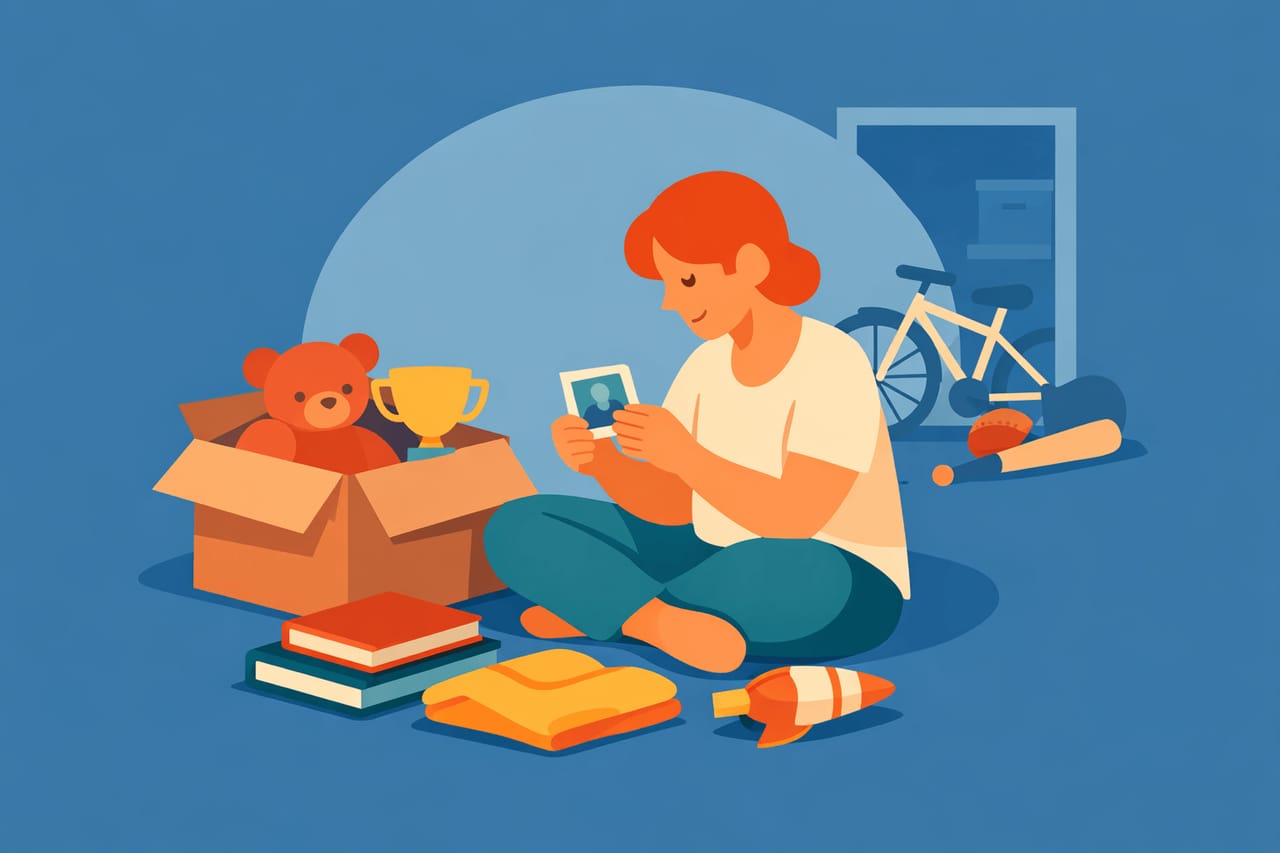
The last kid has moved out. The house feels quieter, bigger, and somehow both empty and overstuffed at the same time. Their bedrooms are frozen in time — posters on the walls, trophies on the shelves, closets full of clothes that haven't been worn in years.
Then there's the rest of the house. The playroom that became a storage room. The garage full of bikes, sports equipment, and science fair projects from 2015. The basement with boxes labeled "kids' stuff" that haven't been opened since the last move.
Downsizing after the kids leave is part practical project, part emotional journey. Here's how to approach it in a way that honors the memories while making space for what's next.
Start With the Easy Stuff
Don't begin in your child's bedroom. That's the hardest room and the fastest way to get overwhelmed before you even start.
Instead, begin with items that have no emotional weight:
- Duplicate kitchen items — You don't need six mixing bowls now that you're cooking for two
- Extra linens — Reduce to what you actually use, plus a guest set
- Outgrown outdoor gear — The kids' bikes, the soccer goals, the basketball hoop
- Media — DVDs, CDs, old game consoles that nobody plays
- Furniture you've been wanting to replace — That saggy couch, the wobbly dining chairs
These items are easy to let go of and give you momentum for the harder decisions later.
Have the Conversation
Before you sell or donate anything that belongs to your kids, ask them. This seems obvious, but many parents skip it — either assuming the kids don't want anything, or assuming they want everything.
A simple approach:
- Take photos of items room by room and send them to your kids
- Give them a deadline — "Let me know by [date] if you want any of this, otherwise I'm selling/donating it"
- Be specific about logistics — "If you want it, you need to come get it or arrange shipping by [date]"
- Respect their choices — If they want Grandma's old rocking chair, find a way to make it happen. If they don't want their Little League trophies, that's okay too.
Most kids will want a small handful of sentimental items and nothing else. But giving them the choice prevents the "You sold my stuff?!" conversation years later.
The Sentimental Items
This is where it gets hard. Every parent has items that feel impossible to let go of:
- First pair of shoes
- Handmade Mother's Day cards
- Team jerseys and uniforms
- School art projects
- Stuffed animals they slept with for years
- The growth chart on the doorframe
Here's a strategy that helps: photograph everything before you let it go.
Take photos of the artwork, the trophies, the room as it looked when they lived there. Create a digital album for each child. The photos preserve the memory without requiring storage space. Some parents even create photo books as gifts for their kids — a tangible collection of their childhood, condensed from boxes of stuff into a beautiful book.
As for what to physically keep — choose a small, defined amount. One box per child of truly irreplaceable items. Letters, photos, a favorite toy, a special piece of art. If it fits in the box, it stays. If it doesn't, the photo is enough.
Room by Room
Kids' bedrooms
- Furniture — Unless you're keeping the room as a guest room with the existing furniture, sell it. Kids' dressers, desks, and bed frames sell well, especially to other parents. See 4 Easy Steps To Get the Best Offers For Your Used Furniture Locally.
- Clothing — Anything they didn't take with them, they don't want. Donate or sell. Brand-name items in good condition sell on OfferTrackr.
- Books — Keep favorites, sell or donate the rest. Children's book collections can be sold as bundles.
- Trophies and awards — Take a photo. Very few adults want their 3rd-grade participation trophies taking up shelf space.
Playroom / family room
- Board games and puzzles — Complete games sell well, especially classic and vintage titles
- Video game consoles — Older consoles (N64, GameCube, original Wii) have collector value
- Craft supplies — Donate to a school or children's program
- Toys — Quality toys (Lego, wooden sets, name brands) sell. Dollar store toys don't. See Toys Going Unused? Follow this helpful guide to sell them online.
Garage and storage
- Bikes — Kids' bikes sell fast and well. Clean them up and list them.
- Sports equipment — Cleats, pads, helmets, bats, rackets — parents of younger kids are always looking for used gear
- Camping and outdoor gear — If your family camping days are behind you, someone else's are just beginning
- Holiday decorations — You probably don't need 15 boxes of Christmas decorations for a smaller household
The boxes you haven't opened
Every family has them — boxes from the last move that were stacked in the basement and never reopened. If you haven't needed what's inside in 3+ years, you almost certainly don't need it now. Open them, salvage anything sentimental, and let the rest go.
How to Sell It
For downsizing, a collection-based approach works much better than individual listings. You're selling dozens of items across multiple categories — managing each one separately would take weeks.
Create a collection on OfferTrackr. Call it something like "The [Family Name] Downsizing Sale." Add items with photos and let the AI suggest prices. Share the link with your neighborhood and community, and let the AI handle buyer messages and negotiations.
This approach means you can declutter at your own pace — add items as you go through rooms, rather than trying to do everything in one weekend. The collection stays live until you're done.
See Collections vs. Individual Listings — Why Selling in Batches Works Better for why this saves so much time.
What to Expect
Downsizing a family home typically takes 2-6 weeks if you're not in a rush. There's no deadline unless you're also selling the house, so go at whatever pace feels right.
Financially, a thorough downsizing sale can generate $500-$2,000+ depending on your furniture, equipment, and how much you've accumulated. Larger homes with more years of accumulation tend toward the higher end.
Emotionally, it gets easier as you go. The first few items are the hardest. By the time you're listing the third dresser, it's just logistics. And the feeling of a lighter, more spacious home is genuinely liberating.
Practically, you'll end up with a house that reflects who you are now, not who you were when the kids were in middle school. That spare bedroom becomes an office, a craft room, or an actual guest room. The garage becomes a workshop. The basement becomes usable space.
You're Not Erasing the Memories
This is the thing every parent needs to hear: selling your kids' old stuff doesn't erase the memories. The memories live in you, in your kids, in the photos, in the stories you tell at family dinners.
The physical items served their purpose beautifully. The soccer cleats got muddy. The art supplies made messes. The bike saw a thousand rides around the neighborhood. They did their job. And now someone else's kid can give them a second life.
Letting go of the things makes room — not just in your house, but in your life — for whatever comes next.
Downsizing is a process, not an event. Take your time, involve your kids, photograph what matters, and let the rest find new homes.
Create a downsizing collection on OfferTrackr and add items at your own pace. For more practical advice, see Step-by-Step Guide to Hosting a Successful Garage Sale, Item won't sell? See Where to Donate Gently Used Items, and How OfferTrackr Makes Selling at Garage Sales and Estate Sales Effortless.